Claude Code Competitor Enterprise Relaunch: How VPC-Isolated Runners and Flat Seat Pricing Are Reshaping the AI Coding Agent Vendor Decision
Claude Code competitor enterprise teams need: VPC-isolated runners fix data egress risk, flat seat pricing kills budget surprises. Here's what changes.

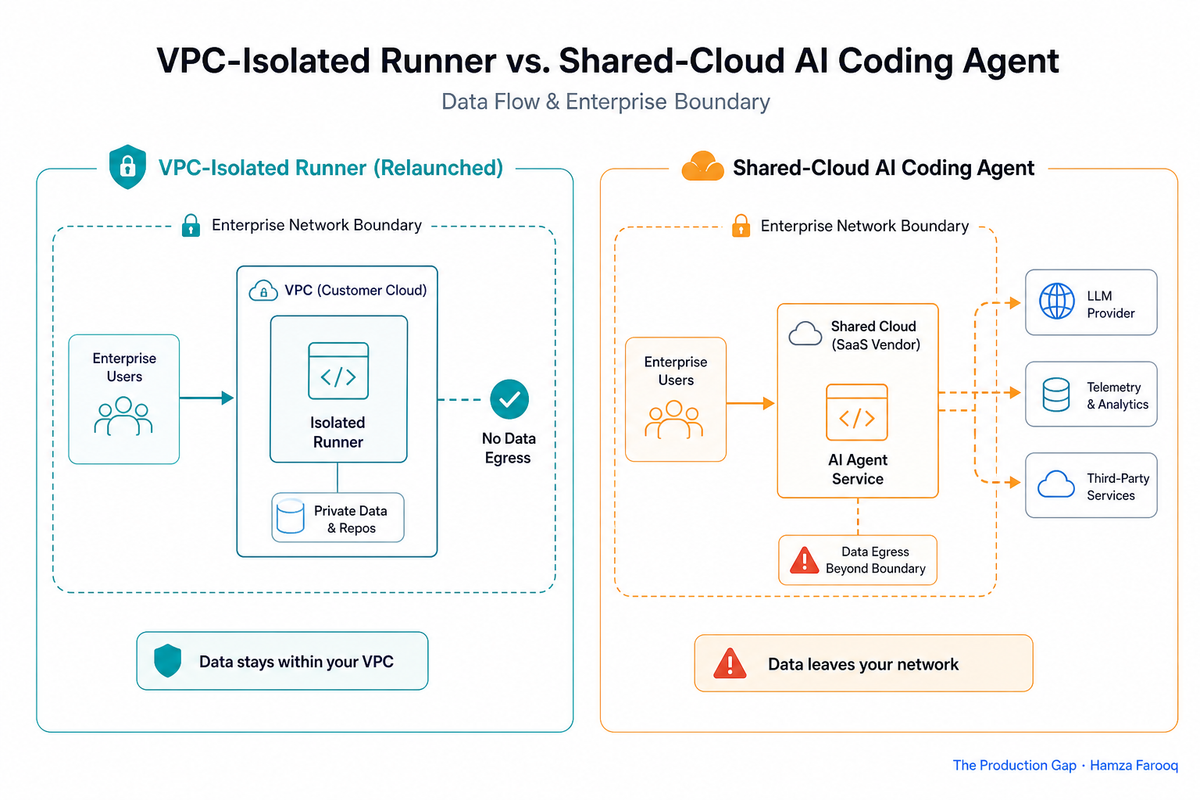
TL;DR: A Claude Code competitor enterprise teams should now seriously evaluate is the relaunched rival offering VPC-isolated runners and flat per-seat pricing, which directly undercuts Claude Code's consumption-based model for high-usage engineering orgs. The VPC isolation removes the data-residency objection that killed previous deals, while predictable seat costs make budget approval faster and total cost of ownership lower at scale.
Key Takeaways
- VPC-isolated runners change the compliance conversation: Code stays inside your network boundary, removing the most common infosec blocker.
- Flat per-seat pricing eliminates budget surprises: Fixed monthly costs let finance plan headcount-based spend like any other SaaS tool.
- SOC 2 Type II is table stakes: Verify current certification status directly with each vendor before signing.
- Model-agnostic platforms reduce lock-in: Swappable underlying models preserve negotiating leverage as the market shifts.
- Data egress and audit logging questions come first: Demand written answers on both before agreeing to any pilot.
Introduction
Coder's relaunch as a VPC-native, flat-seat-priced Claude Code competitor targets the two blockers that routinely delay enterprise approvals: data egress risk and billing unpredictability. Claude Code alternatives are now evaluated across provider control, deployment model, open-source options, and pricing structure, and vendors winning enterprise deals compete hardest on the last two.
Why do AI coding agent deals stall at infosec review rather than at the IDE?
Enterprise AI coding agent deals stall at infosec review because shared-cloud architectures route source code through vendor infrastructure outside the corporate network boundary, triggering mandatory data egress review under most enterprise security policies.
VPC-isolated runner architecture addresses this directly. Model computation happens inside a runner within your own cloud VPC (AWS, GCP, or Azure), so code never crosses the corporate network boundary during inference. The Nimbalyst enterprise platform comparison frames deployment control as a first-order evaluation criterion. When a pilot has stalled, examine the deployment architecture before assuming a tool-quality problem.
How does Coder's VPC-isolated runner architecture compare to Claude Code's self-hosted deployment model?
The PeerSpot comparison confirms Claude for Enterprise does offer self-hosted options. The question is not whether it can stay within your infrastructure, it can. The question is which team owns the work.
Separate two concepts that are easy to conflate: data residency and operational residency. VPC-isolated runners deliver both, code stays in your VPC and the vendor manages the infrastructure layer. Self-hosted deployments offer data residency but impose full operational ownership, including upgrade cycles, model versioning, scaling, and security patching. Factor that resource cost into total cost of ownership before choosing a deployment model.
Before your next vendor call, ask: "Who owns the upgrade cycle, and does a model version update require my team to redeploy anything?"
Does flat per-seat pricing actually change the enterprise budget conversation?
Yes. Flat per-seat pricing converts AI coding agent spend from a usage-variable line item into a fixed, headcount-based SaaS cost that finance teams already have established processes to evaluate and approve.
| Pricing model | Predictability | Budget approval friction | Heavy user penalty | Best fit |
|---|---|---|---|---|
| Token/consumption-based | Low | High | Yes | Individual developers, experimental pilots |
| Flat per-seat | High | Low | No | Enterprise teams with finance approval gates |
| Tiered usage caps | Medium | Medium | Partial | Mid-market teams with moderate usage |
Methodology: Author synthesis based on publicly listed pricing structures as of Q2 2026. Verify current pricing directly with each vendor before procurement.
What should enterprise procurement teams demand from any Claude Code competitor before signing?
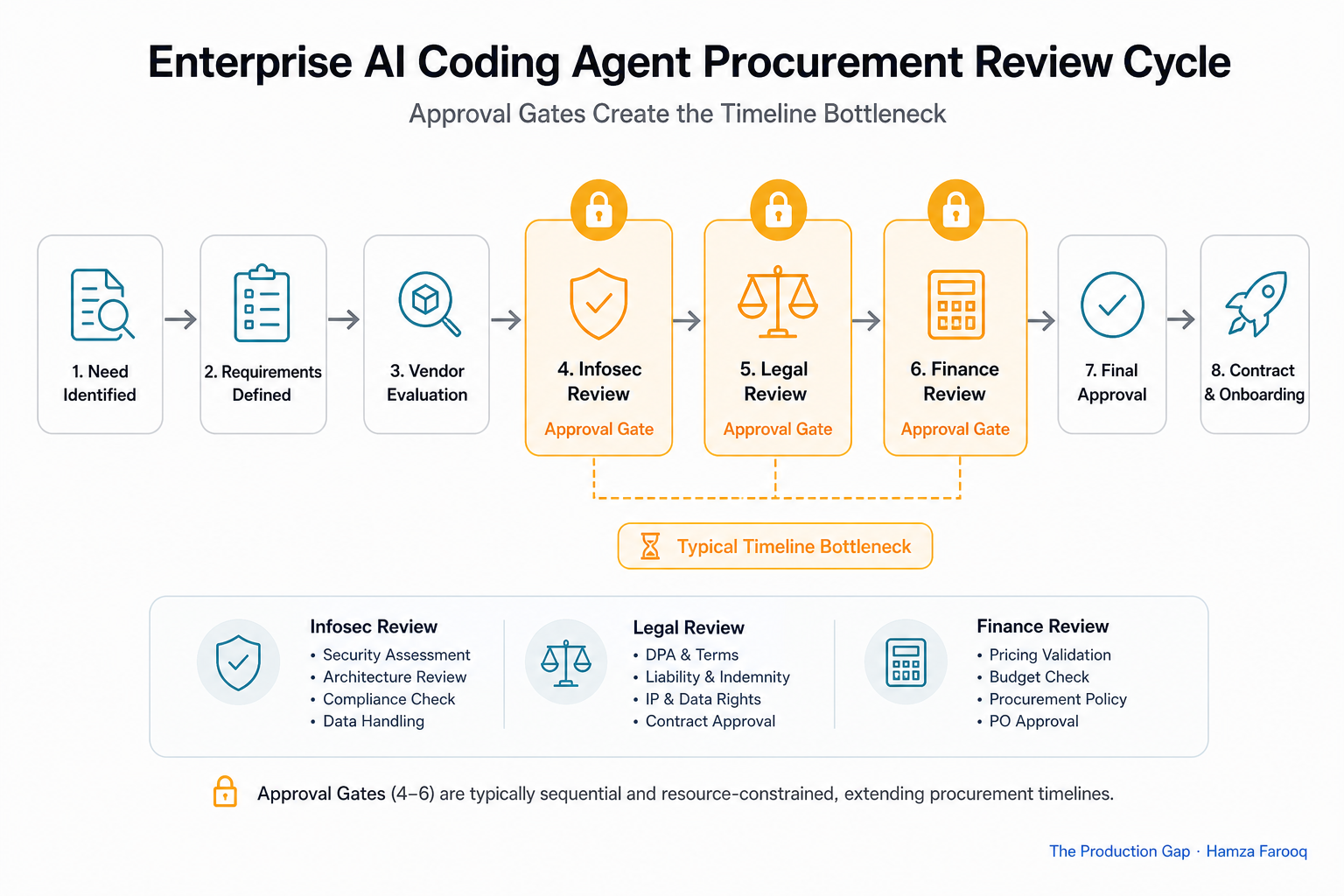
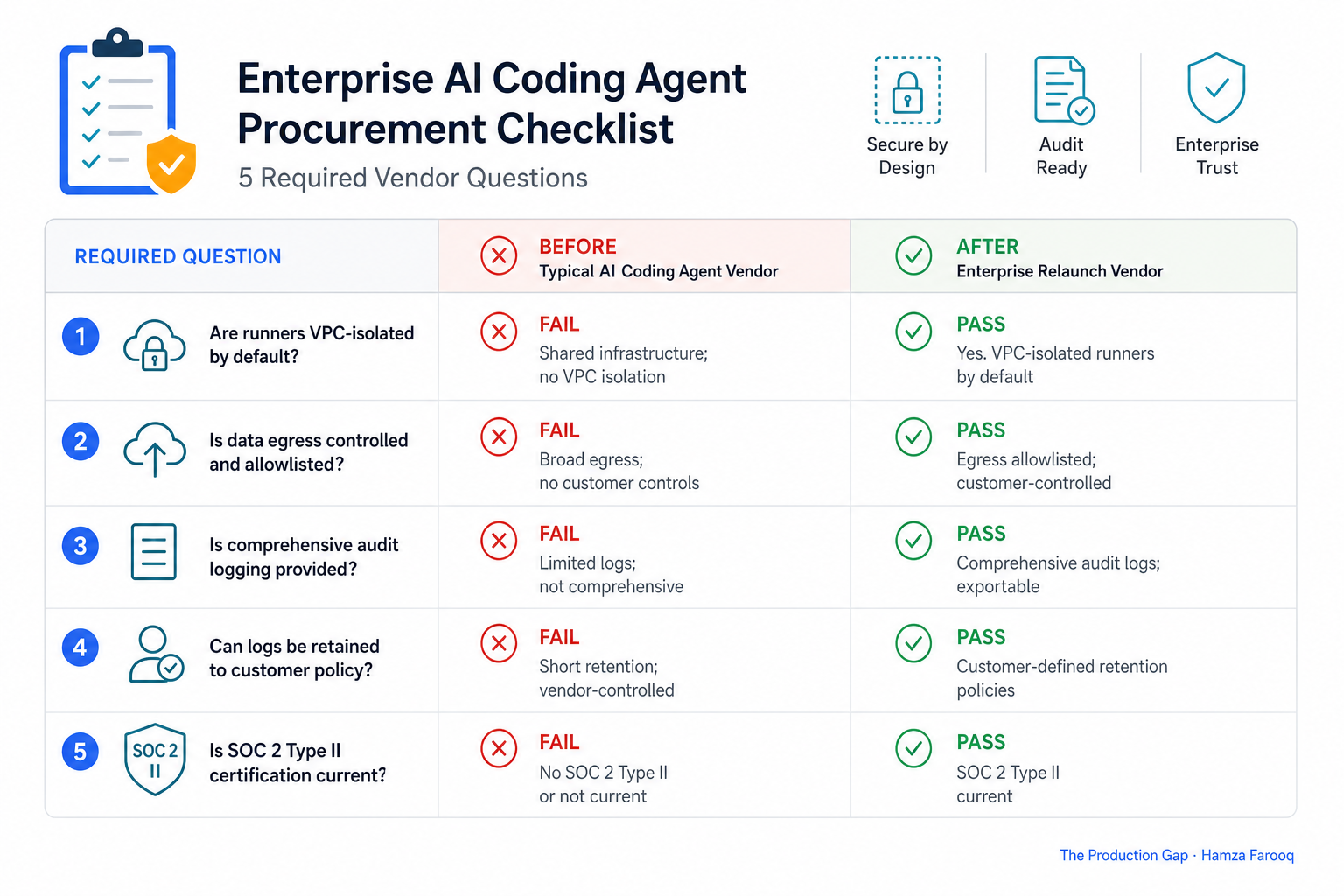
- Data egress: Does any code, comment, or variable name leave your VPC during inference? Require a written architecture diagram, not a verbal assurance.
- Model training opt-out: Does the vendor use your code to fine-tune their models? Require written opt-out confirmation, a real legal exposure for any IP-sensitive codebase.
- Audit logging: Can your security team pull a complete log of every agent action, file touched, and API call made? Required for SOC 2 compliance on your side.
- SOC 2 Type II: Kilo.ai's 2026 comparison treats compliance posture as a baseline criterion. Verify current certification status directly, certifications lapse without public announcement.
- Model substitution: If a provider changes terms or pricing, can you swap underlying models without re-architecting workflows? Model-agnostic platforms offer this protection; single-model vendors do not.
Vendors who deflect on any of these five should be deprioritized regardless of how strong their IDE demo appeared.
Frequently asked questions
What does flat per-seat pricing mean for enterprise teams with variable developer headcount? Flat per-seat pricing sets a fixed monthly cost per active seat regardless of usage volume, eliminating consumption-based budget risk. Require the vendor to clarify how mid-term seat additions are priced before signing.
What is the vendor lock-in risk of a single-model AI coding agent versus a model-agnostic platform? Single-model platforms tie your workflows to one provider's roadmap and pricing decisions, leaving no leverage if terms change without a full re-architecture. Model-agnostic platforms allow model swaps without rebuilding workflows, protecting your investment and strengthening your position at contract renewal.
Do VPC-isolated runners work with existing cloud infrastructure, or do they require separate provisioning? VPC-isolated runners deploy within your existing AWS, GCP, or Azure environment, no separate cloud account required. Confirm with each vendor which cloud providers are supported and whether your current VPC configuration meets their network requirements.
How does Jira or Linear integration affect procurement approval timelines? Direct integrations with existing project management tools reduce the "yet another tool" objection from engineering leads and give finance a clearer adoption story tied to existing software spend.
Conclusion
Vendors advancing through enterprise evaluations are winning because they removed the objections legal and finance use to delay decisions, not because they offer marginally better code generation. Coder's relaunch positions it directly against those objections with VPC-isolated runners and flat-seat pricing.
Your next step: Take the five procurement questions above, build them into a vendor security questionnaire, and send it to every vendor before scheduling another demo. Written responses within one week is a reasonable baseline to expect from any enterprise-ready vendor
Learn from me
Claude Code in Practice, my Maven cohort. Master Claude Code from fundamentals to advanced orchestration: skills, subagents, hooks, MCP, and production automation. Join the next cohort →
Hire us
Traversaal.ai. We're a team of forward deployed engineers solving the toughest AI problems for Fortune 100 companies: document intelligence, agentic data platforms, and real-time web intelligence, deployed in production. Work with our team to deploy your next agentic ecosystem. Talk to Traversaal.ai →
Join us
Want to solve these problems with us? We're always looking for forward deployed engineers who want to ship production AI. jobs@traversaal.ai