When to Use AI Agents (And When Not To): A Decision Framework for Product Teams
When to use AI agents isn't always obvious. Use this decision framework to pick the right AI architecture — and avoid costly over-engineering.
AI pilot production gap explained: why 90% of enterprise AI pilots never ship—and the strategies high-performing teams use to actually reach production.
Build vs buy AI? Learn which path protects your competitive edge, controls TCO, and scales enterprise AI agents without costly surprises.
Natural language data analytics explained: see how agentic BI converts plain-English questions into charts, forecasts, and SQL—without the guesswork.
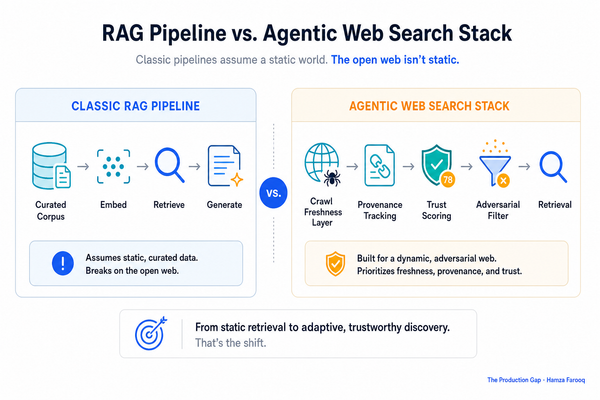
LLM search APIs fix knowledge cutoffs by grounding AI agents in real-time web data. Learn how to add retrieval, citations, and freshness to your agent.
RAG demo best practices that win enterprise deals: learn scoped corpus design, source citations, and retrieval pipeline tips from a real podcast search teardown.
AI agent guardrails that hold under real load need layered defense-in-depth—input filters, output validators, and execution controls working together.
Claude Code hooks enforce hard guardrails your AI agent can't argue around. Learn exit codes, lifecycle events, and shell handlers that keep agentic workflows safe.
Model context protocol demystified: learn the host-client-server architecture, secure your MCP integrations, and connect internal systems to Claude Code.
AI agent PRD templates need eval criteria, guardrails, and escalation paths. Get the section-by-section framework that keeps agents safe and shippable.
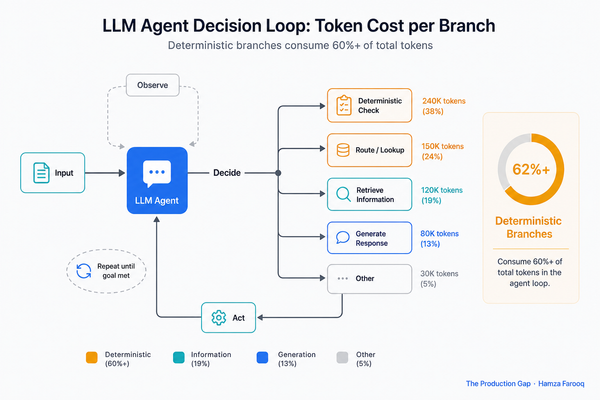
Claude Code cost optimization tactics that cut token spend 50–80%: prompt caching, model routing, and context hygiene with real benchmark data.
AI agent evaluation explained for PMs: measure trajectory, tool use, and task completion—not just accuracy—before your agent ships to production.