Gartner Magic Quadrant for Enterprise AI Coding Agents: Who Made the Leaders Quadrant and What Buyers Should Check Before Choosing
Gartner Magic Quadrant enterprise AI coding agents decoded: top vendors, Leaders quadrant criteria, and a procurement checklist to pick the right tool.

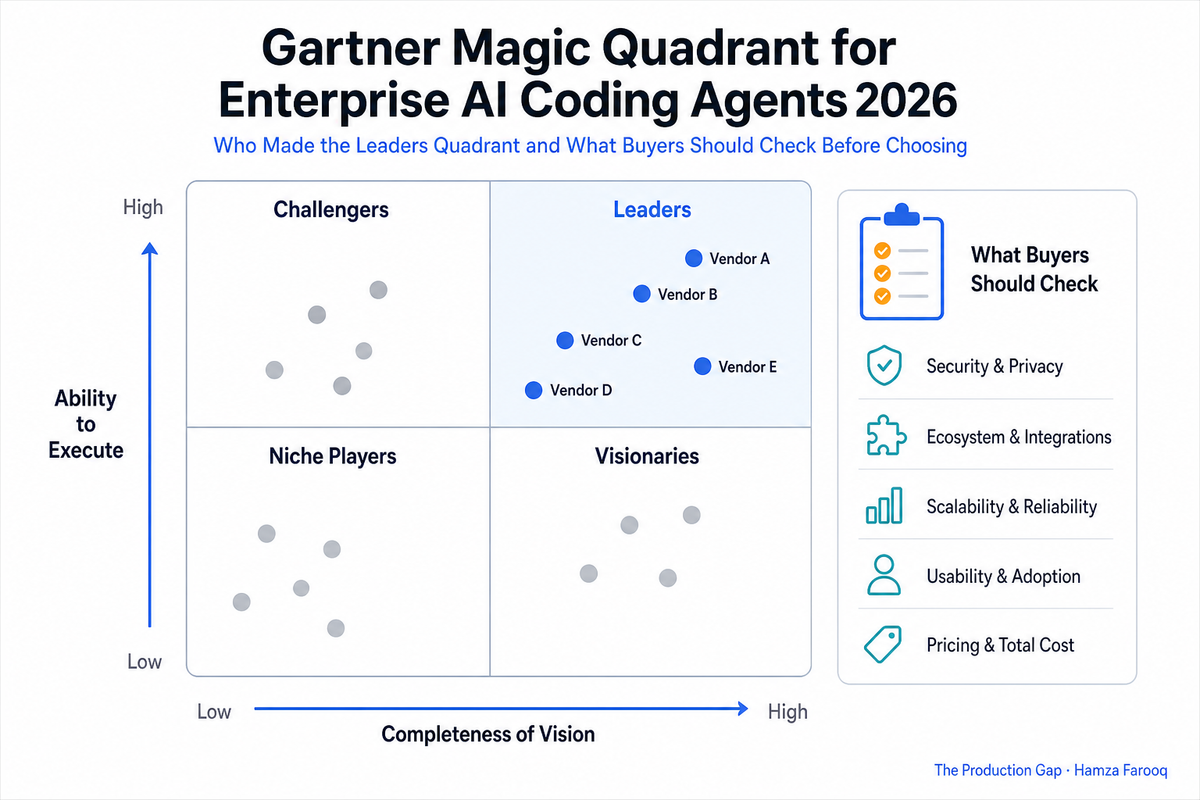
TL;DR: As of Q2 2026, a Gartner Magic Quadrant specifically named "Enterprise AI Coding Agents" has not been independently confirmed or sourced for this article. Specific vendor placements are unverified here and must be checked against the published Gartner document ID before citing. What this guide does deliver is a named, structured evaluation methodology and a procurement checklist that applies regardless of which vendors Gartner ultimately places in any quadrant.
Key Takeaways
- Vendor quadrant placements cited elsewhere must be verified against the published Gartner document ID. Specific Leaders quadrant listings are not confirmed in this article.
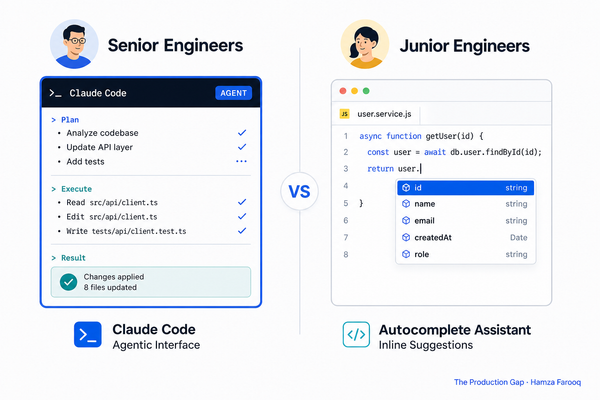
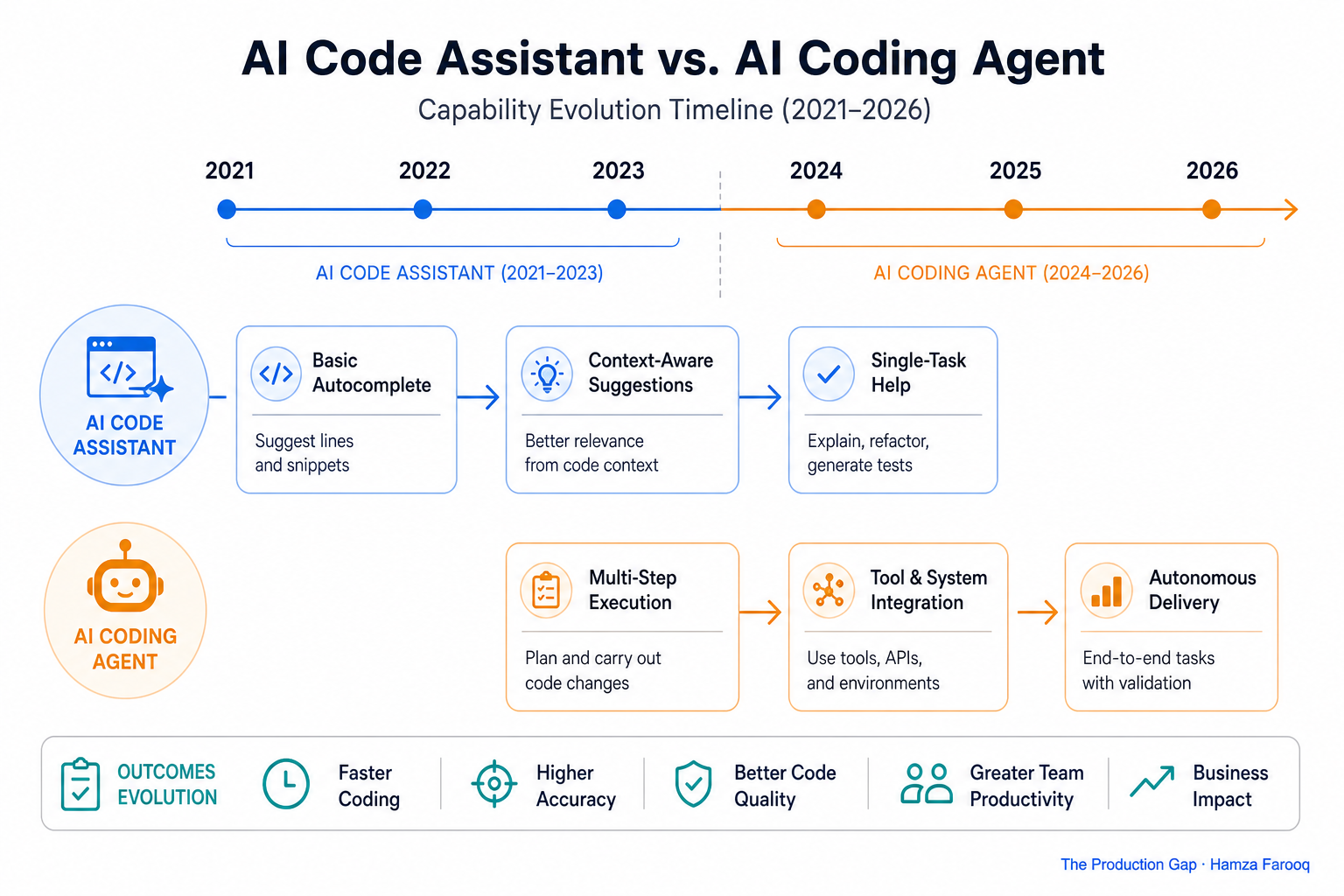
- The category rename signals real change: "Enterprise AI coding agents" replaces "AI code assistants", autocomplete is out, autonomous plan-write-test-ship workflows are in.
- Leaders quadrant placement is a starting point, not a finish line: Position reflects vision and track record, not fit with your stack.
- Security and IP risk need their own evaluation track: Verify indemnification terms, training data exposure, and on-premises options before signing.
- The ATCR Pilot Framework (Autonomy, Test generation, CI/CD integration, Review automation) is the author-synthesized methodology used throughout this guide to evaluate agentic capability beyond quadrant placement.
- Competitive pressure is compressing timelines: Peers reporting productivity gains are pushing procurement teams to rush decisions that deserve structured evaluation.
Why did Gartner create a separate Magic Quadrant for enterprise AI coding agents?
Gartner creates standalone Magic Quadrants when vendor count, buyer spend, and evaluation criteria have matured enough to be meaningfully distinct from neighboring categories, and the shift from AI code assistants to AI coding agents clears that bar.
Which vendors are most likely to appear in the Leaders quadrant?
In an inaugural Magic Quadrant, quadrant position can correlate with how long a vendor has been briefing Gartner analysts. A strong agent autonomy engine paired with a lean analyst relations team may land in Visionaries on day one. Alongside the hyperscalers, emerging pure-play agentic platforms with established enterprise customer bases are also plausible Leaders or Visionaries candidates, though their specific placements require the same document-level verification. Use quadrant placement as a shortlist filter, not a selection decision.
| Quadrant | What it signals | What it does not tell you |
|---|---|---|
| Leaders | Strong vision plus proven enterprise execution | Developer adoption rates in your stack |
| Challengers | Proven execution, narrower vision | Whether autonomy depth matches Leaders |
| Visionaries | Strong roadmap, less proven at scale | Time-to-value in your environment |
| Niche Players | Focused use-case fit | Breadth for org-wide deployment |
What agentic capability benchmarks should enterprise buyers demand?
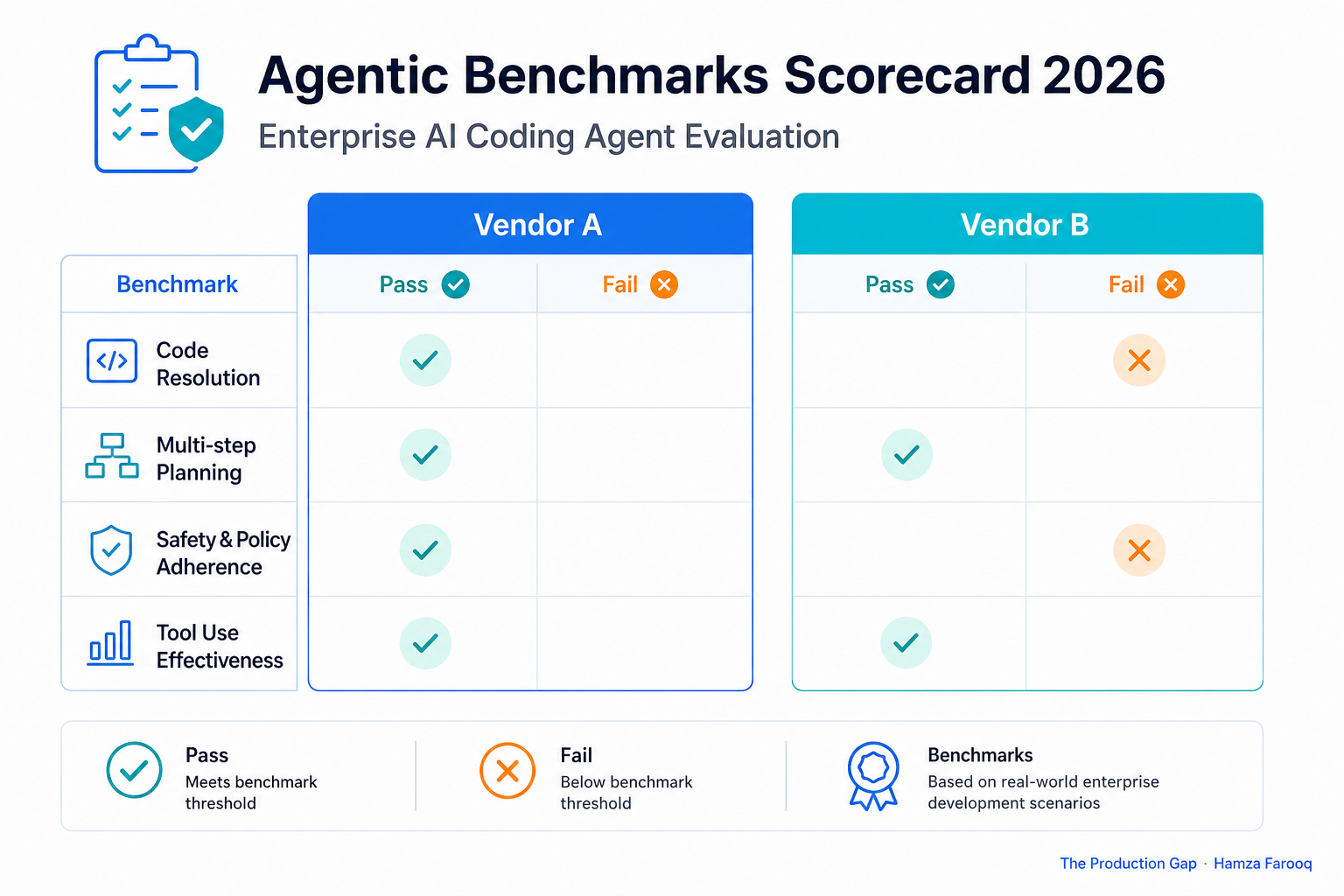
Enterprise buyers should require vendors to demonstrate four agentic benchmarks in their own environment, none of which quadrant placement guarantees. This guide uses the ATCR Pilot Framework as a structured methodology for that evaluation.
The ATCR Pilot Framework covers four named benchmarks:
- Autonomy, Autonomous multi-file task completion. Can the agent accept a plain-language feature request, identify all affected files, make coordinated edits, and produce a working pull request without mid-task human intervention? Vendors who require a pre-configured demo environment are signaling their agent needs scaffolding your team will not always provide.
- Test generation, Intelligent test generation and failure interpretation. Require a live demonstration on a non-trivial bug in an unfamiliar codebase. The agent's ability to self-correct on failure is more diagnostic than its initial output quality.
- CI/CD integration, Pipeline integration without mandatory approval gates. Can the agent push through a full pipeline, lint, build, test, staging deploy, autonomously? Every mandatory human checkpoint reduces the throughput gains you are buying the tool to achieve.
- Review automation, Measurable code review automation. Demand pilot data from a real deployment, not projected metrics. Review cycle reductions are meaningful only when the agent is integrated into the actual pipeline, not used as a standalone editor.
| ATCR Benchmark | Pass Criterion | Fail Signal |
|---|---|---|
| Autonomy | Agent completes multi-file PR with no mid-task human prompt | Requires guided scaffolding or vendor-controlled demo environment |
| Test generation | Agent self-corrects on failure in an unfamiliar codebase | Only succeeds on pre-seeded or vendor-prepared test cases |
| CI/CD integration | Agent runs full pipeline autonomously end to end | Any mandatory human approval gate breaks autonomous flow |
| Review automation | Pilot data from real deployment shows measurable cycle reduction | Vendor supplies projected metrics only, no live environment data |
Require all demonstrations in a sandboxed replica of your actual environment, not a vendor-controlled demo instance.
What should buyers evaluate beyond the quadrant?
Beyond quadrant placement, enterprise buyers must independently evaluate code IP indemnification terms, training data exposure risk, and true total cost of ownership, dimensions the Magic Quadrant does not score.
IP indemnification: When an agent produces code substantially similar to unlicensed training data, who is liable? Contractual indemnification terms warrant close legal review for any organization with a public-facing product. Request explicit written positions from vendors before advancing to procurement.
Training data exposure: Does the vendor train on code the agent processes in your environment? Enterprises in regulated industries such as financial services, defense, and healthcare should treat this as a binary filter before any other evaluation begins.
True total cost of ownership: Seat licensing is the visible cost. GPU compute, integration engineering, security tooling, and developer onboarding are the costs buyers consistently underestimate. Build a multi-year TCO model before any procurement approval rather than relying on vendor projections alone.
Security, IP, and TCO reviews should run in parallel with product evaluation. Findings in any one of those tracks can eliminate a Leaders-quadrant vendor from contention entirely.
Frequently Asked Questions
How is this Magic Quadrant different from previous AI code assistant evaluations? It evaluates vendors on agentic capabilities, autonomous task planning, multi-step execution, and CI/CD integration, versus the prior focus on autocomplete accuracy and IDE plugin quality.
What is the difference between an AI code assistant and an enterprise AI coding agent? An assistant is reactive, single-file, and requires a human decision at each step. An agent autonomously plans, executes, tests, and iterates across multi-step tasks, a fundamentally different category with different integration, security, and procurement requirements.
How should enterprises evaluate AI coding agents without relying solely on Gartner placement? Run structured pilots using the four ATCR benchmarks in a sandboxed replica of your real environment, and build a multi-year TCO model before committing. Pilot data produces defensible, environment-specific conclusions that no analyst report can substitute.
Conclusion
The Gartner Magic Quadrant for Enterprise AI Coding Agents is a useful starting point and a poor ending point.
Specific vendor placements must be verified against the published Gartner document ID, this article does not confirm them. What it does confirm is that quadrant position reflects both genuine product capability and analyst relations maturity, and those two things are not the same.
The more defensible evaluation lens is autonomy depth: can the system plan a multi-step task, execute it across a real codebase, verify its own output, and push through your CI/CD pipeline without intervention? The ATCR Pilot Framework gives procurement teams a named, repeatable structure for answering that question with environment-specific data rather than borrowed analyst conclusions.
The quadrant identifies who to call. Your pilot determines who to buy.
Learn from me

Claude Code in Practice, my Maven cohort. Master Claude Code from fundamentals to advanced orchestration: skills, subagents, hooks, MCP, and production automation. Join the next cohort →
Hire us
Traversaal.ai. We're a team of forward deployed engineers solving the toughest AI problems for Fortune 100 companies: document intelligence, agentic data platforms, and real-time web intelligence, deployed in production. Work with our team to deploy your next agentic ecosystem. Talk to Traversaal.ai →
Join us
Want to solve these problems with us? We're always looking for forward deployed engineers who want to ship production AI. jobs@traversaal.ai