Context Engineering for AI Agents: The Discipline That Matters More Than Prompt Wording
Context engineering AI agents beats prompt wording every time. Learn how memory layers, retrieval design, and context control drive reliable agent outputs.

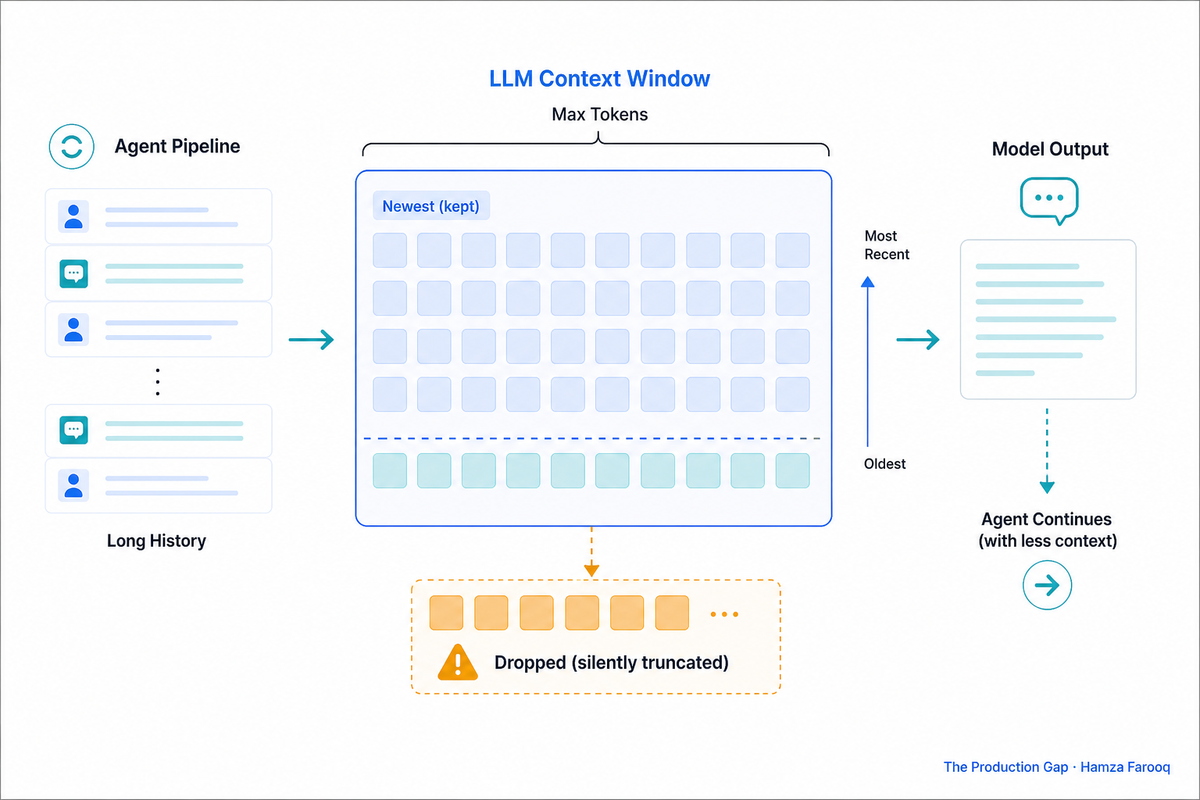
TL;DR: Context engineering AI systems-deciding what information an agent receives, when, and in what form-matters more than prompt wording because agents fail or succeed based on context quality, not sentence polish. A perfectly worded prompt fed incomplete or poorly structured context produces unreliable outputs; precise context design directly controls reasoning, tool use, and decision quality at every step of an agentic pipeline.
Key Takeaways
- Context engineering beats prompt wording: What information sits in front of the model matters far more than how cleverly you phrase instructions.
- Agent memory has three distinct layers: Short-term, long-term, and episodic, ignoring any one causes agents to forget critical details mid-task.
- Compression is a core engineering skill: Actively summarize and trim earlier context or the model quietly drops what no longer fits.
- Retrieval errors create false memories: Wrong documents make the model confidently act on irrelevant information.
- Context pollution tanks performance: Dumping every tool result into the window buries the signals the model needs.
- Big context windows don't solve the problem: Filling million-token windows carelessly drives up cost, smart selection is still required.
Introduction
Your agent ran 47 tool calls, produced a confident answer, and quietly forgot the user's core constraint around step 12. No error. No warning. Just wrong. Agent failures in 2026 are rarely a model intelligence problem, they're an information logistics problem.
What is context engineering, and how does it differ from prompt engineering?
Context engineering is the discipline of deciding what information enters an agent's context window, when it enters, and what gets removed, a fundamentally different problem from writing better instructions.
Prompt engineering is about phrasing: word choice, instruction structure, few-shot examples. Context engineering is about information architecture: which facts, tool results, memory snapshots, and retrieved documents are present at inference time. A beautifully worded prompt attached to a poisoned or incomplete context fails every time.
Think of a trial lawyer. The closing argument is the prompt (polished, precisely worded) but it only works if the jury saw the right evidence. Managing what the jury remembers is the real job.
| Dimension | Prompt Engineering | Context Engineering |
|---|---|---|
| Primary lever | Instruction wording | Information selection and sequencing |
| When it's applied | Authoring time (static) | Runtime (dynamic) |
| Failure mode | Ambiguous instructions | Missing, stale, or excess information |
| Main skill | Writing clarity | Retrieval, memory, compression |
| Scales with agent length? | No (degrades | Yes) if designed correctly |
Top-performing coding agents are separated from the field through superior context selection and retrieval precision, not system prompt variation. If your agent is losing track of constraints mid-task, tweaking the system prompt is the wrong debugging tool.
How do AI agents manage memory across long multi-step tasks?
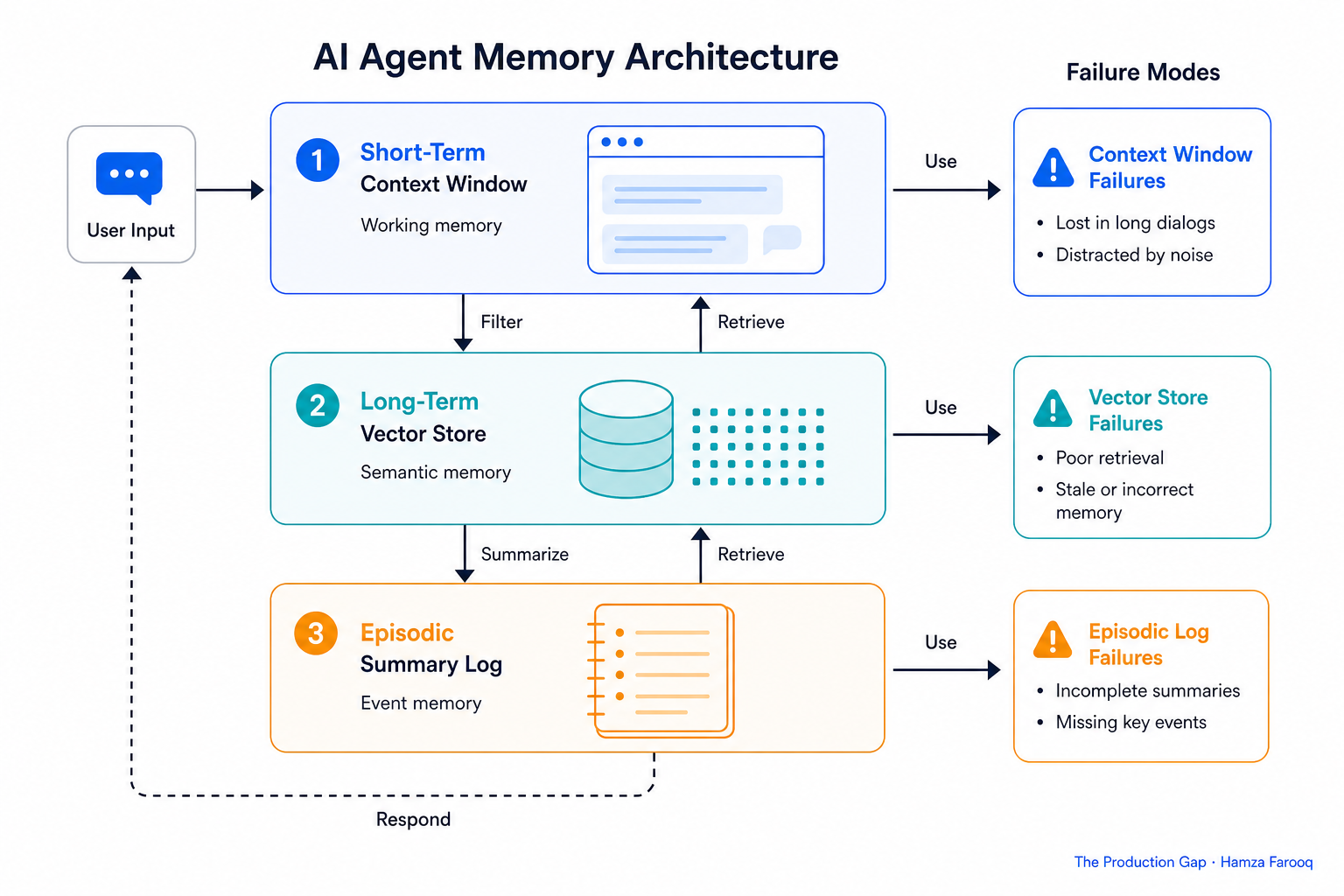
AI agents manage memory across three distinct layers (short-term, long-term, and episodic) and a failure in any one causes agents to lose track of earlier instructions without any visible error.
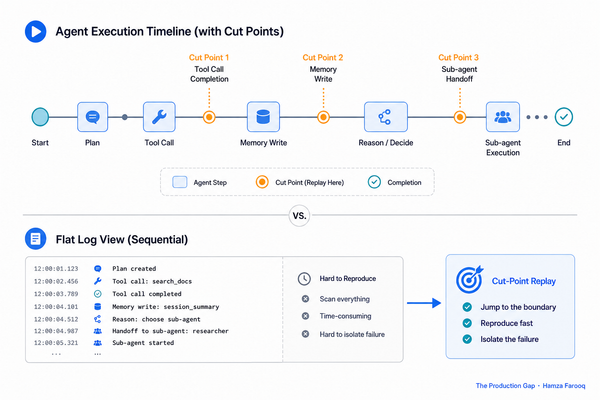
Short-term memory is the live context window: fast and always available, but finite. The failure mode is silent truncation, when the window fills, older content including original task constraints is dropped without warning.
Long-term memory is an external vector store read via retrieval calls. The failure mode is retrieval hallucination: semantically adjacent but irrelevant documents get pulled in and treated as ground truth. A coding agent that retrieves a deprecated API spec will confidently implement against the wrong interface.
Episodic memory is the compressed record of what the agent has already done. The failure mode is compression loss: summarization strips details that seemed minor at step 5 but become critical constraints at step 35. A research agent that drops "exclude studies under 100 participants" from its episodic summary will silently violate that constraint for the rest of the run.
What are the most effective context engineering techniques in production?
The most effective techniques are structured context formatting, active compaction with constraint pinning, and retrieval filtering, each targeting a different source of context degradation.
Structured context formatting means replacing raw tool dumps with clearly labeled sections: <task_constraints>, <current_state>, <tool_result>.
Active compaction with constraint pinning is the highest-leverage intervention for preventing mid-task drift. Pin original task constraints verbatim in a protected section. Only compress intermediate reasoning and tool results, witness testimony gets summarized, but the judge's instructions stay on the board for the entire trial.
Retrieval filtering with relevance thresholds means rejecting results that fall below a minimum cosine similarity score. Fixing retrieval quality is cheaper than repairing degraded outputs downstream.
What are the most dangerous context engineering anti-patterns in production?
The most dangerous anti-patterns are context pollution, retrieval hallucination, and silent truncation, all three produce confident but wrong outputs with no error signal.
An agent that crashes is easy to fix. An agent that confidently violates a constraint 30 steps back is harder to catch: the output looks finished, the logs show no failures, and the damage only surfaces when someone checks the work. These aren't edge cases in production; they're the normal failure mode for under-instrumented pipelines.
Context pollution accumulates when every tool result and scratchpad note piles up until noise buries signal. If more than 30% of your agent's context at step 40 is irrelevant to the current sub-task, you have pollution. Fix it with active eviction, remove completed sub-task artifacts after each major phase.
Retrieval hallucination is addressable at the threshold level. Set a threshold and audit it quarterly as your archive drifts.
Silent truncation is the most insidious, no log, no exception, no complaint. Mitigate with instrumentation: log context window utilization at every agent step and alert at 80% capacity. By the time you hit 100%, tokens are already being dropped while your agent reports success.
Frequently asked questions
What is the difference between context engineering and prompt engineering?
Prompt engineering is static instruction wording baked in before the agent runs; context engineering is dynamic information selection that changes with every tool call and retrieval step. For single-turn tasks, prompt engineering is sufficient, for long-running agents, only context engineering scales.
Why do AI agents forget information in the middle of a task?
The primary cause is silent truncation: when the context window fills, older content is dropped without any error signal. Episodic compression loss compounds this when summarization discards details that later become critical.
How do you compress context without losing critical information?
Pin original task constraints verbatim in a protected, never-summarized section. Only compress intermediate reasoning and tool outputs, treat original constraints as immutable state that must survive the entire run intact.
What is context pollution in AI agents?
Context pollution is the accumulation of tool results, scratchpad notes, and reasoning steps until noise overwhelms signal. Fix it by actively evicting completed sub-task artifacts after each major phase.
Conclusion
The reliability ceiling teams are hitting with long-running agents is not a model problem. It's information logistics. Three places to start:
Instrument your pipeline to log context window utilization at every step. An alert above 80% gives you a warning before silent truncation begins (without it, you're finding out after the fact. Audit your RAG retrieval and set a relevance threshold tighten from there as you learn where your corpus drifts. Then check where your original task constraints live. If they aren't in a protected, never-summarized section, they're compressible) and under enough pressure, they'll be compressed away.
Context engineering isn't a new layer on top of prompt engineering. Better wording never fixed a broken information pipeline, and it won't start now.
Learn from me

Agent Engineering Bootcamp: Developers Edition, my Maven cohort. Advanced agentic RAG, multi-agent orchestration, memory, evals, and guardrails. Take agents from prototype to production. Join the next cohort →
Hire us
Traversaal.ai. We're a team of forward deployed engineers solving the toughest AI problems for Fortune 100 companies: document intelligence, agentic data platforms, and real-time web intelligence, deployed in production. Work with our team to deploy your next agentic ecosystem. Talk to Traversaal.ai →
Join us
Want to solve these problems with us? We're always looking for forward deployed engineers who want to ship production AI. jobs@traversaal.ai