Non-Human Identity Security: How to Govern AI Agent Credentials Before They Govern You
Non-human identity security starts with knowing what you have. Learn to govern AI agent credentials, kill static keys, and stop over-permissioned NHIs today.

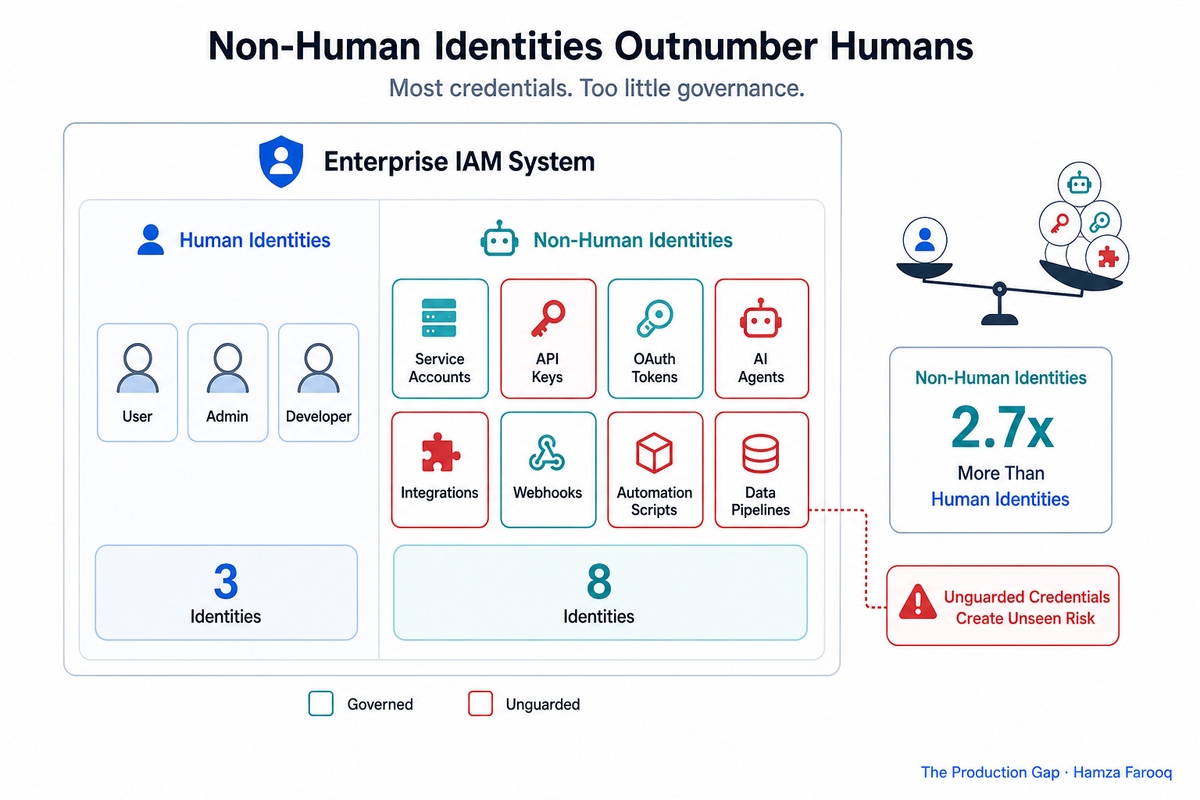
TL;DR: Non-human identity security is the practice of governing credentials assigned to machines, APIs, and AI agents so they cannot be exploited, over-permissioned, or abandoned. AI agent identities represent the newest and least-governed credential class in the enterprise. A compromised agent chains tool calls and spawns sub-agents at machine speed, multiplying exposure far beyond what traditional service accounts created. Audit existing non-human identities first, then enforce least-privilege and short-lived tokens before deploying agents at scale.
Key Takeaways
- NHIs are proliferating fast: AI agents, service accounts, and API keys are among the least-governed identities in the enterprise.
- Static keys are a baseline failure: Credentials that never expire are an open door; short-lived, just-in-time tokens are the minimum acceptable standard.
- Discovery before governance: You cannot secure identities you do not know exist. Full inventory across cloud, SaaS, and on-premises is the mandatory first step.
- Agent blast radius dwarfs a stolen password: A compromised agent chains API calls, spawns sub-agents, and writes to datastores, all before anomaly detection fires.
- Workload federation replaces long-lived secrets: SPIFFE/SPIRE and workload identity federation let services prove identity without storing a secret at all.
Introduction
As of 2026, AI agents, service accounts, API keys, OAuth tokens, and bots make up the digital credentials that keep today's organizations running, and most were provisioned outside any formal IAM workflow. These non-human identities (NHIs) represent a growing and often ungoverned attack surface that security teams are still catching up to.
What makes this different from the usual credential hygiene problem is autonomous action. A compromised AI agent does not just leak data; it takes business-logic actions at machine speed. This article gives platform and security engineers a concrete mental model, a clear ownership framework, and actionable access-control patterns to close the gap.
What is a non-human identity, and why do AI agents change the risk model?
An NHI is a digital credential, service account, API key, OAuth token, bot credential, or AI agent identity, that authenticates an automated system rather than a human. In practice, these identities are created across cloud, SaaS, and on-premises environments, often by different teams with no shared governance standard.
A fundamental security principle for non-human identities is the shift away from standing privileges: permanent, constant access granted to a machine identity that no longer needs it.
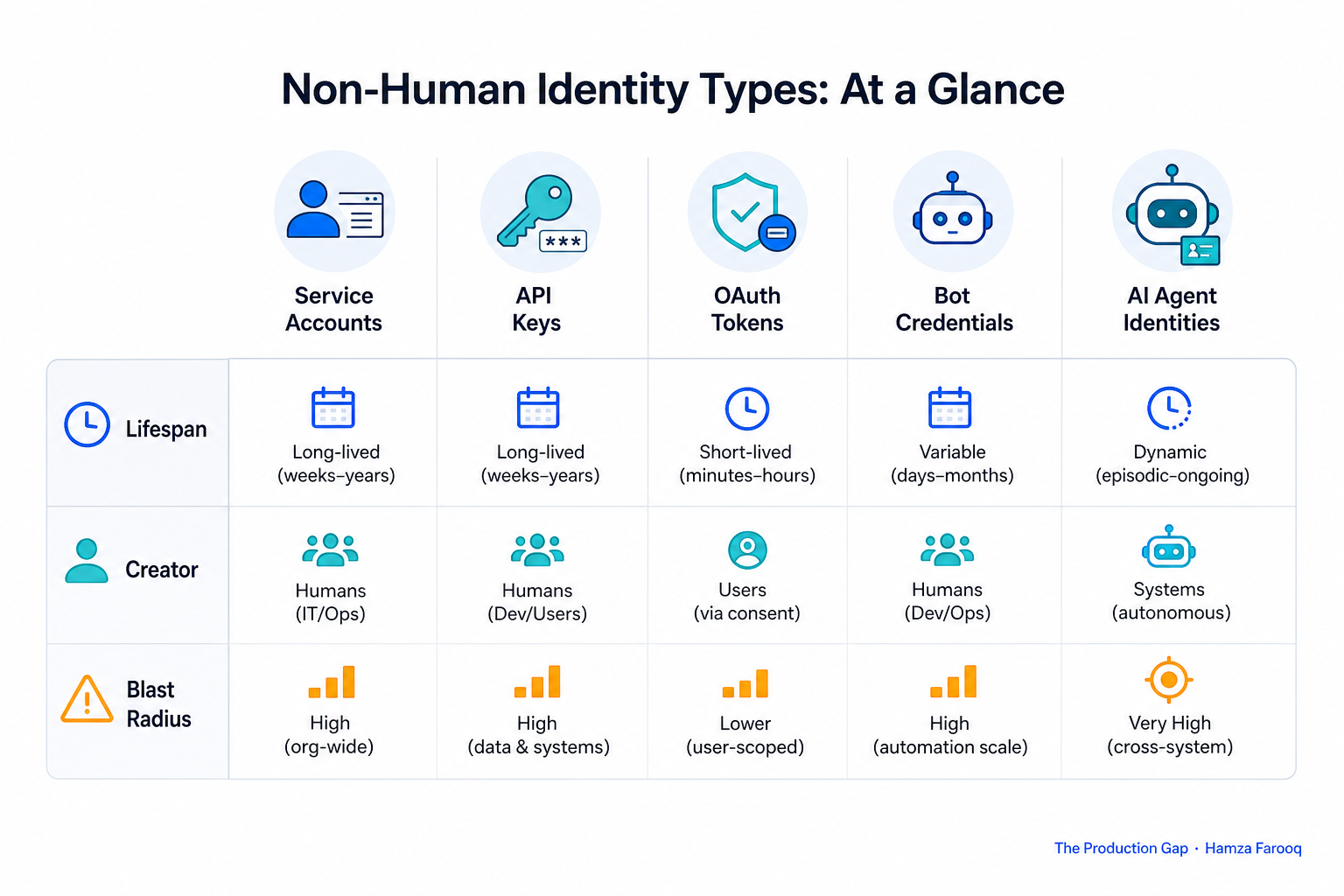
Table 1: NHI Types by Governance Risk Profile
| NHI Type | Typical Lifespan | Created By | Primary Risk | Blast Radius |
|---|---|---|---|---|
| Service Account | Months to Years | Ops / Platform Eng | Standing privileges, no owner | Scoped to account permissions |
| API Key | Months to Years | Any developer | Stored in code, rarely rotated | Depends on scope; often broad |
| OAuth Token | Hours to Days | App / SaaS platform | Over-permissioned, refresh token misuse | SaaS data and connected apps |
| Bot Credential | Months to Years | IT / DevOps | Shared across teams, no individual owner | Broad, tied to shared account |
| AI Agent Identity | Variable | Product team | Provisioned outside IAM, prompt injection vector | Autonomous multi-system action |
The novel risk AI agents introduce
Unlike a service account that calls one API on a fixed schedule, an AI agent dynamically decides which API to call, can spawn sub-agents, and interprets natural-language instructions. That last point creates a meaningful governance problem: a service account does what it was coded to do, while an AI agent does what it is told to do, and instructions can be injected through a data source the agent reads.
Think of a service account as a vending machine that dispenses one product. An AI agent is a contractor with a master key who takes instructions from whoever hands them a note. Governance has to account for who can instruct the agent, not just what credentials it holds.
Who is responsible for non-human identity security?
No single team currently owns non-human identity security in most enterprises, and that accountability gap is itself the primary vulnerability.
Why the autonomous-action blast radius changes the stakes
A compromised human credential enables data exfiltration, which is at least detectable at login or egress. A compromised AI agent credential enables write operations, triggers business logic, and spawns downstream agents, all before an anomaly alert fires. Audit frameworks built around data leakage are structurally ill-suited to detecting this kind of activity.
The accountability fix requires three steps: mandate a named human owner for every NHI at provisioning time; block credential creation outside IAM via a CI/CD pipeline gate; and assign periodic access reviews to the named owner, not a generic security queue.
What access patterns replace static credentials for agentic workloads?
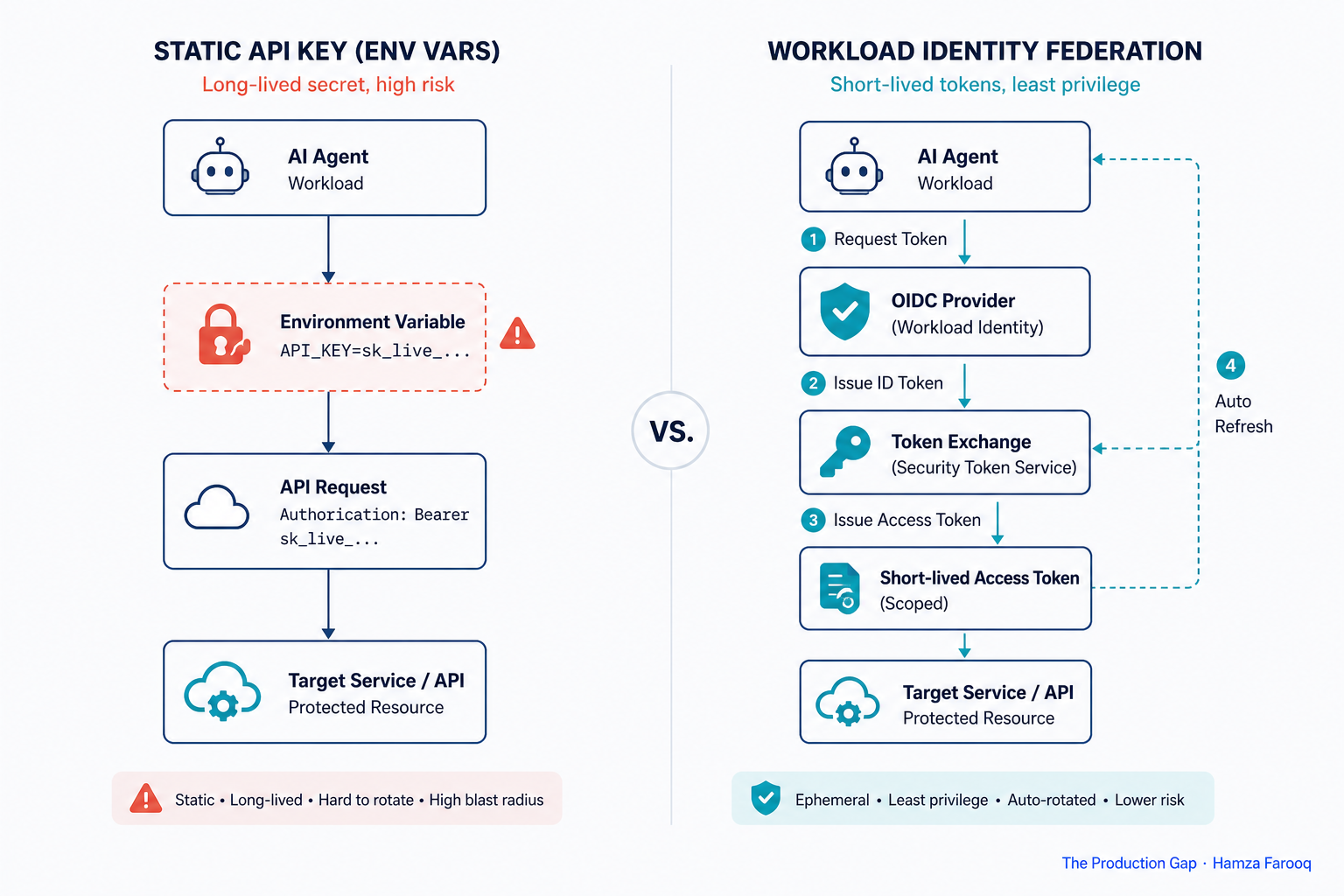
Static API keys should be replaced with short-lived, just-in-time credentials issued through workload identity federation, SPIFFE/SPIRE, or platform-native token exchange, eliminating the stored secret attackers need.
Workload Identity Federation (WIF): A workload presents a short-lived OIDC token; the identity provider exchanges it for scoped cloud credentials. No secret is stored at rest. An AI agent running in a container can receive credentials that expire in minutes rather than months, and major cloud platforms offer native support for this pattern.
SPIFFE/SPIRE: This assigns cryptographic SVIDs to workloads as short-lived X.509 certificates or JWTs. It is particularly useful in multi-cloud and hybrid environments where platform-native WIF does not cover the full topology. The agent never holds a password; it holds a rotating certificate.
Dynamic secrets via secrets manager: For external APIs that still require a key, secrets management platforms can generate short-lived, scoped credentials per request and revoke them automatically after a defined TTL. Each credential becomes time-bounded rather than persistent.
Governance overlay for all three: before any NHI reaches production, confirm what system uses the identity, what it can access, and what it actually does. That is the OASIS Security three-proof model, and it is the right bar to set.
How should a platform team audit thousands of untracked identities?
Start by discovering every machine identity across cloud, SaaS, and on-premises, you cannot certify or revoke what you have not found.
The DISCOVER Framework is an eight-step audit sequence, Discover, Identify, Scope, Certify, Offboard, Validate, Enforce, Review, for governing all machine credentials across cloud, SaaS, and on-premises environments. It is the framework used in this guide as a practical sequencing tool, not an externally measured standard.
- Discover: Enumerate all NHIs across every environment
- Identify owner: Map each NHI to a named human accountable party
- Scope permissions: Confirm least-privilege against actual usage logs
- Certify: Apply the OASIS three-proof model, user, access, behavior [7]
- Offboard stale identities: Revoke any NHI with no recent usage
- Validate token patterns: Flag all static credentials for replacement
- Enforce pipeline gates: Block credentials created outside IAM workflow
- Review periodically: Assign recurring certification to named owners
Triage by blast radius, not count. Rank NHIs by scope of permissions, whether the identity can take autonomous action, and whether a named owner is assigned. A large set of dormant service accounts is a compliance problem. One ungoverned AI agent with write access to internal APIs is an active operational risk.
Frequently Asked Questions
Q1: What is the difference between a service account and an AI agent identity for access control purposes? A service account executes fixed, code-defined tasks with a static credential. An AI agent executes instruction-driven tasks dynamically, which makes the source and integrity of those instructions a first-class access control concern, not just a model safety issue.
Q2: How do AI agents acquire credentials, and what governance controls should wrap that process? Agents typically pull credentials at initialization from environment variables, a secrets manager, or workload identity federation. Every acquisition should trigger an IAM workflow: named owner assigned, scope documented, and a review date set before the agent reaches production.
Q3: What does workload identity federation replace, and does it apply to AI agent workloads? It replaces stored API keys by letting a workload prove identity cryptographically at request time. It applies to AI agents running in cloud-native environments where credentials expire within a short window rather than persisting indefinitely.
Q4: What is the blast radius of a compromised AI agent compared to a compromised human credential? A compromised human credential typically enables data exfiltration, detectable at login or egress. A compromised agent credential enables autonomous action, chaining API calls, writing to datastores, spawning sub-agents, at machine speed before anomaly detection fires.
Conclusion
NHI security is a primary attack surface of the agentic enterprise. The tooling exists: SPIFFE/SPIRE, workload identity federation, dynamic secrets, and NHI-focused capabilities from vendors across the identity security market are available today. What most organizations are missing is accountability. Until a named human owns every machine credential, technical controls will be applied inconsistently and audited rarely.
The agents are already running. Governing them starts with knowing they exist and knowing who is responsible for them.
This week: run a discovery pass across your cloud IAM consoles and SaaS OAuth grant lists, then name one human owner for every unowned NHI you find. Ownership before governance is where non-human identity security actually starts.
Learn from me
Forward Deployed Engineering Bootcamp for Full-Stack Developers, my Maven cohort. Build and ship complete AI products end to end, from React and Node.js frontends to deployed models with caching and observability. Join the next cohort →
Hire us
Traversaal.ai. We're a team of forward deployed engineers solving the toughest AI problems for Fortune 100 companies: document intelligence, agentic data platforms, and real-time web intelligence, deployed in production. Work with our team to deploy your next agentic ecosystem. Talk to Traversaal.ai →
Join us
Want to solve these problems with us? We're always looking for forward deployed engineers who want to ship production AI. jobs@traversaal.ai