AI Agent Identity Verification: Why Enterprises Need a Know Your Agent (KYA) Framework
AI agent identity verification is now a compliance must. Learn how a Know Your Agent framework protects enterprises before EU AI Act deadlines hit.

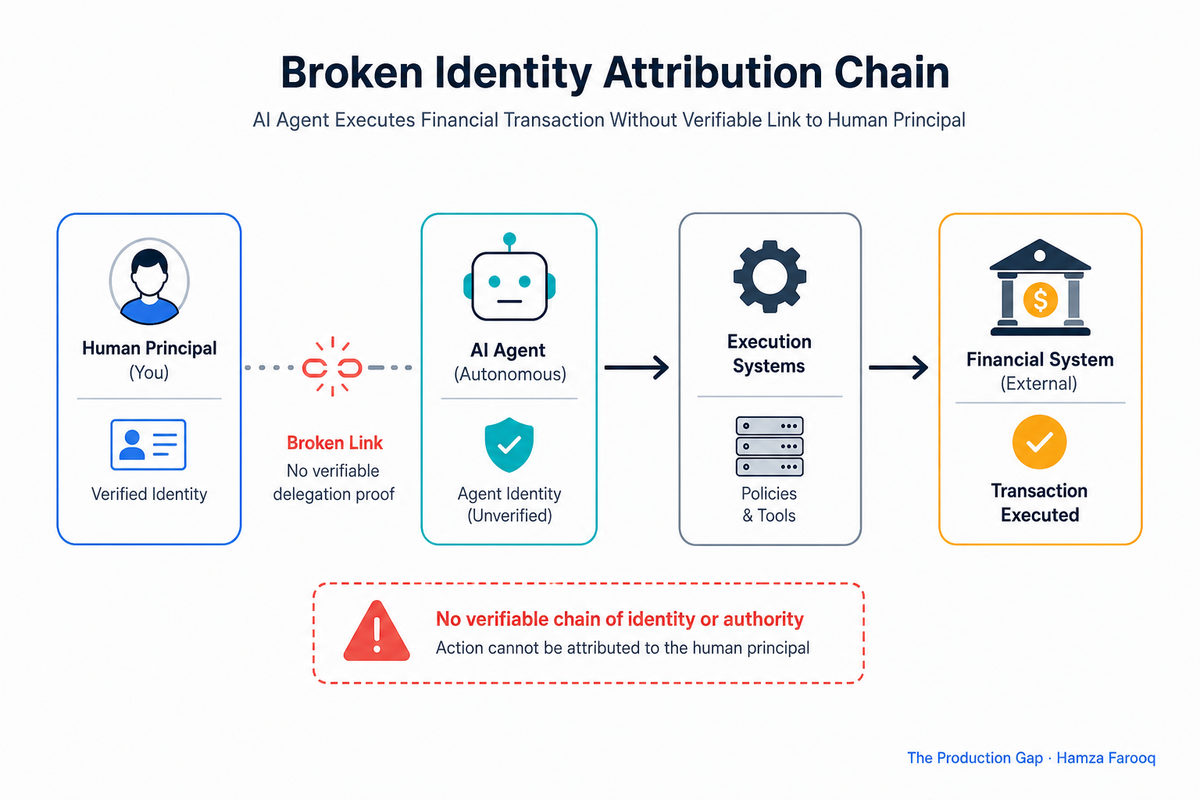
TL;DR: AI agent identity verification is now a compliance requirement, not an option. Enterprises that deploy autonomous agents without a Know Your Agent (KYA) framework face regulatory exposure and financial liability as August 2026 EU AI Act enforcement obligations take effect. A structured KYA approach built across three trust domains gives platform and security leads a concrete path to authenticate agents before they act.
Key Takeaways
- KYA fills a real identity gap: AI agents that buy things or move money have no built-in identity system. Know Your Agent frameworks are the first structured fix.
- Delegation chains must be traceable: Every hand-off of authority from human to agent must be logged and verifiable.
- One-time login is not enough: Continuous identity checks throughout each session prevent fraud that onboarding controls cannot catch.
- Three trust domains must all be covered: Payment rail identity, principal risk profiling, and digital asset infrastructure each address a failure mode the others cannot. This guide calls this combination the Three-Domain KYA Trust Stack.
- The window is closing: Enterprises running agents without a verified identity layer face simultaneous regulatory penalties and unattributable financial losses.
An AI agent just approved a large procurement order on your behalf, and when the auditor asks who authorized it, your system's only answer is "the agent." As of August 2026, that answer is no longer legally acceptable under EU AI Act obligations that became binding this year.
What is Know Your Agent, and how does it differ from traditional KYC?
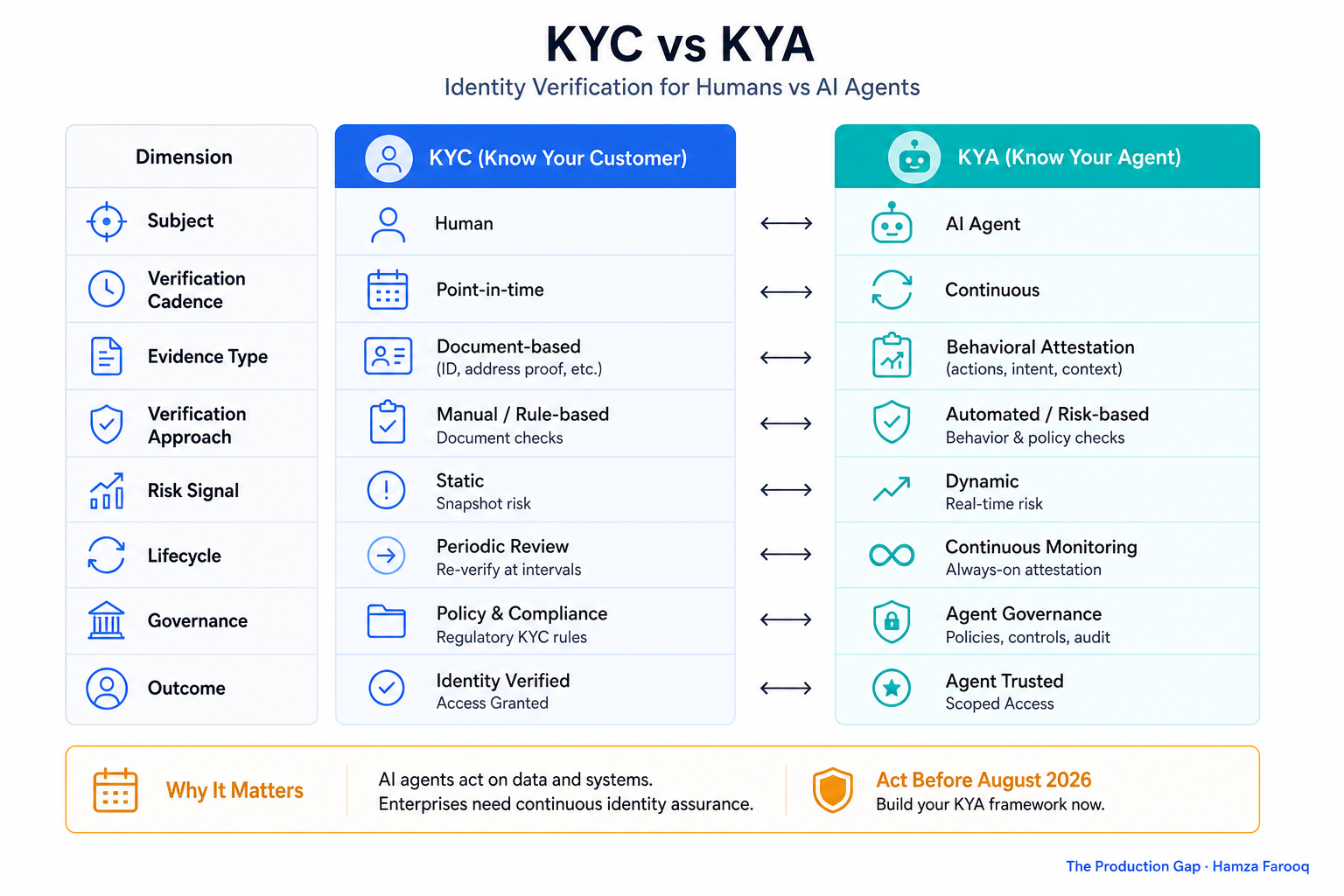
Know Your Agent (KYA) is an emerging identity standard that assigns autonomous AI agents a persistent, auditable credential, distinct from the human principal who owns it, so every action can be attributed, traced, and governed.
Traditional Know Your Customer (KYC) verifies a human at onboarding: passport, face match, credit check. AI agents break every assumption underneath that model. An agent can be repurposed without its credential ever being updated, or spawn sub-agents mid-workflow outside the scope of any onboarding control. KYC has no answer for any of that.
KYA introduces three things KYC was never built to handle:
- Agent-native credentials: A persistent identity token tied to the agent's model version, deployment scope, and permissions, not its owner's identity.
- Principal delegation records: A cryptographically verifiable chain showing which human or parent agent delegated authority, to what scope, and under what conditions.
- Behavioral attestation: Ongoing verification that the agent acting at minute twelve is the same agent credentialed at minute zero.
What does EU AI Act enforcement mean for enterprises running transacting agents right now?
| EU AI Act Obligation | What It Requires | Typical Gap in Agentic Stacks |
|---|---|---|
| Auditable identity trail | Every action attributed to a verified, logged actor | Agents act under shared service accounts |
| Human oversight mechanism | A human can intervene or halt the agent at any point | Session-level override controls missing |
| Accountability chain | Clear record of who authorized the agent to act | Delegation from human to agent is undocumented |
KYA models are now considered a must for enterprises in the agentic commerce era. Enterprises without a documented KYA layer are exposed to enforcement action under provisions that became binding this year.
How does a production-grade KYA protocol actually work?
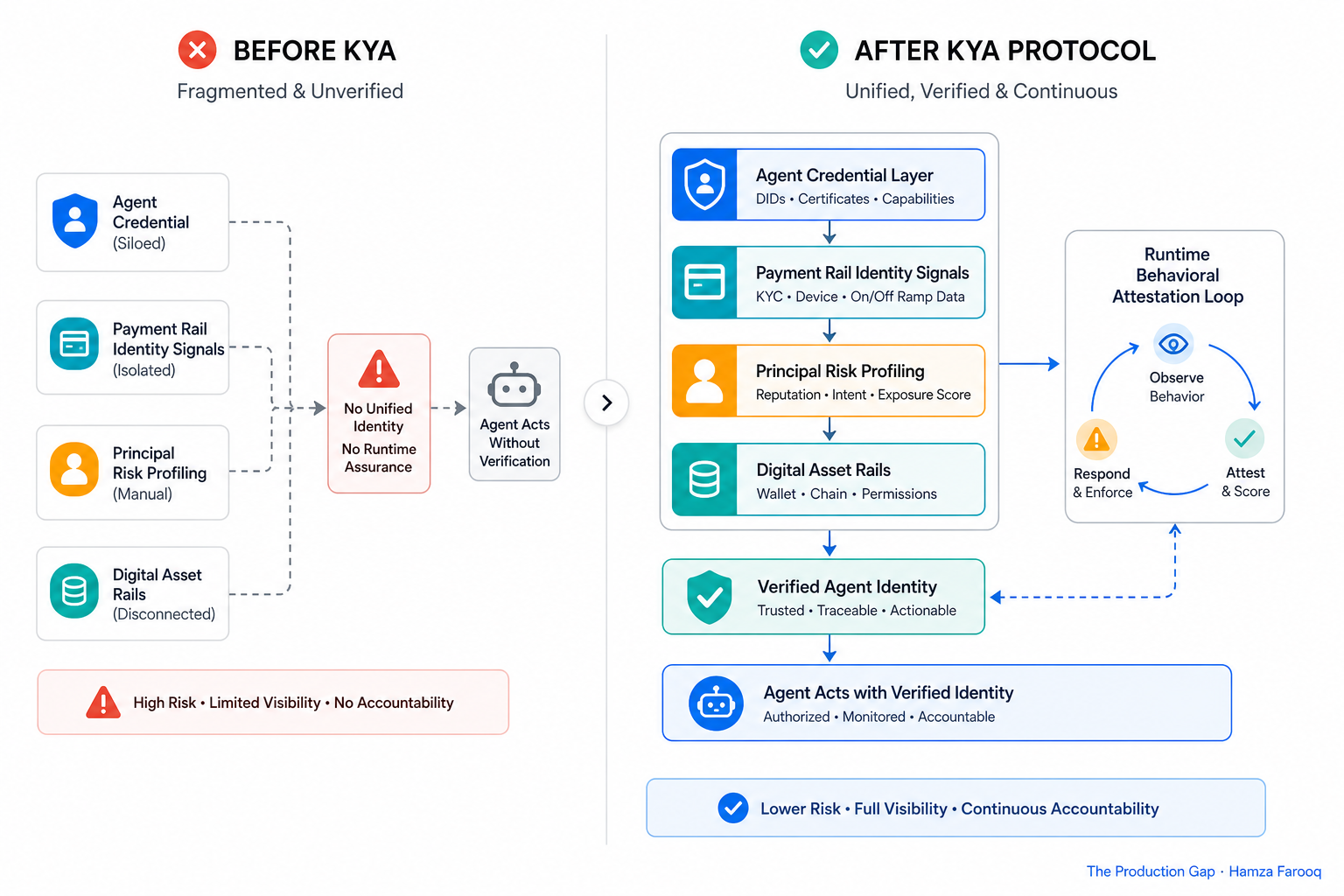
A well-constructed KYA implementation combines agent credentialing at onboarding, delegation chain logging, and runtime behavioral monitoring that continuously re-verifies agent identity throughout a live transaction. Each of those layers addresses a distinct failure mode that the others cannot cover alone.
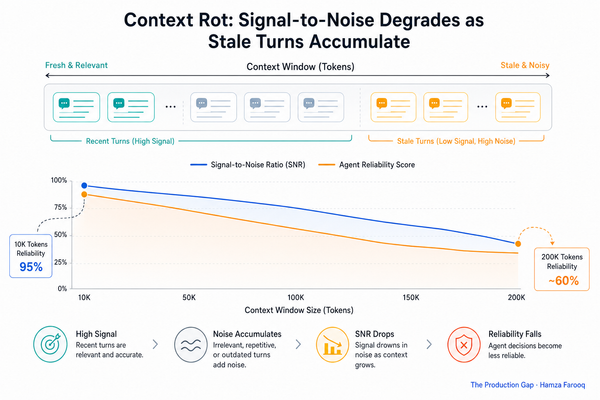
Most KYA discussion stops at onboarding. The harder problem is mid-session identity drift. An agent credentialed at transaction start can be compromised via prompt injection or context-poisoning between steps, without triggering any onboarding-time control. Static verification at the gate is necessary, but insufficient on its own.
In this guide, I synthesise coverage requirements across what we label the Three-Domain KYA Trust Stack: payment rail identity signals at the transaction layer, risk profiling anchored to the principal's financial standing, and infrastructure covering digital asset flows initiated by autonomous agents. Enterprises should evaluate whether their current vendors close all three gaps before the next financial transaction runs.
The Three-Domain KYA Trust Stack is a practical framework for scoping vendor evaluation and internal audit. It is not a published industry standard, but it maps directly to the obligation categories in the EU AI Act enforcement table above.
What must platform and security leads do immediately to establish a defensible KYA layer?
Platform and security leads need to take four immediate actions: audit every production agent for identity attribution gaps, implement delegation logging before the next agent transaction runs, deploy runtime behavioral monitoring, and map their agent inventory against applicable regulatory criteria.
Step 1: Inventory and classify. Register every AI agent touching financial, procurement, or sensitive data workflows. Document the human principal, delegated authority scope, and whether a verifiable credential exists. Most enterprises will find agents running under shared service accounts with no individual attribution.
Step 2: Implement delegation chain logging. Before any agent executes a transaction, the authorization chain, including human principal, agent credential, and permitted action scope, must be cryptographically logged and retrievable.
Step 3: Replace point-in-time verification with continuous attestation. Deploy session-level behavioral monitoring that detects mid-transaction anomalies: unexpected capability expansion, novel API calls outside credentialed scope, or behavioral signatures inconsistent with the agent's baseline.
Step 4: Map against high-risk regulatory criteria. Document which agents meet the EU AI Act's high-risk threshold and what human oversight mechanisms exist for each. 1Kosmos confirms that verifiable agent identities are foundational to any defensible governance posture.
Frequently Asked Questions
Q: How do enterprises assign a persistent identity to an AI agent operating across multiple systems and sessions?
A persistent agent identity requires a credential tied to the agent's model version, deployment configuration, and authorized permission scope, not to the human account that launched it. This agent-native credential is the foundational requirement for traceable AI agent authentication because it decouples the agent's identity from its owner's identity, making every downstream action attributable to a specific, versioned entity. Vouched.id provides guidance on implementing this credential layer for production environments.
Q: What is the difference between authenticating an AI agent at onboarding versus continuously verifying it during a live transaction?
Onboarding authentication is a point-in-time check confirming the agent matches its registered credential. Continuous verification confirms it still matches at every transaction step, closing the gap where prompt injection can compromise an agent after it clears the gate. Neither replaces the other, and both are required for a complete KYA implementation.
Q: What infrastructure components should financial institutions evaluate when trusting AI-initiated payments?
Financial institutions should evaluate coverage across all three layers of the Three-Domain KYA Trust Stack described in this guide: payment rail identity signals at the transaction level, principal risk and credit profiling as a trust anchor, and infrastructure that extends to digital asset flows. Vouched.id's KYA identity guide provides a practical checklist for assessing vendor coverage across these layers. Enterprises should verify with their own vendors which of these layers are actually in place before agents execute live transactions.
Conclusion
The enterprise AI stack has a non-human identity problem, and as of August 2026, it is simultaneously a regulatory problem, a fraud problem, and an accountability problem with direct financial consequences.
The exposure most platform leads underestimate is not the agent nobody credentialed. It is the agent that passed every gate, ran clean for the first few steps, and was then compromised mid-workflow. That action traces back to your organization regardless. PYMNTS has framed KYA not as optional infrastructure but as a necessary evolution in how businesses authenticate and govern agents acting on their behalf.
Use the Three-Domain KYA Trust Stack as your audit scope, run the four-step implementation sequence against every agent currently in production, and have a documented delegation chain and runtime monitoring layer in place before the next financial transaction runs.
Learn from me

Agent Engineering Bootcamp: Developers Edition, my Maven cohort. Advanced agentic RAG, multi-agent orchestration, memory, evals, and guardrails. Take agents from prototype to production. Join the next cohort →
Hire us
Traversaal.ai. We're a team of forward deployed engineers solving the toughest AI problems for Fortune 100 companies: document intelligence, agentic data platforms, and real-time web intelligence, deployed in production. Work with our team to deploy your next agentic ecosystem. Talk to Traversaal.ai →
Join us
Want to solve these problems with us? We're always looking for forward deployed engineers who want to ship production AI. jobs@traversaal.ai